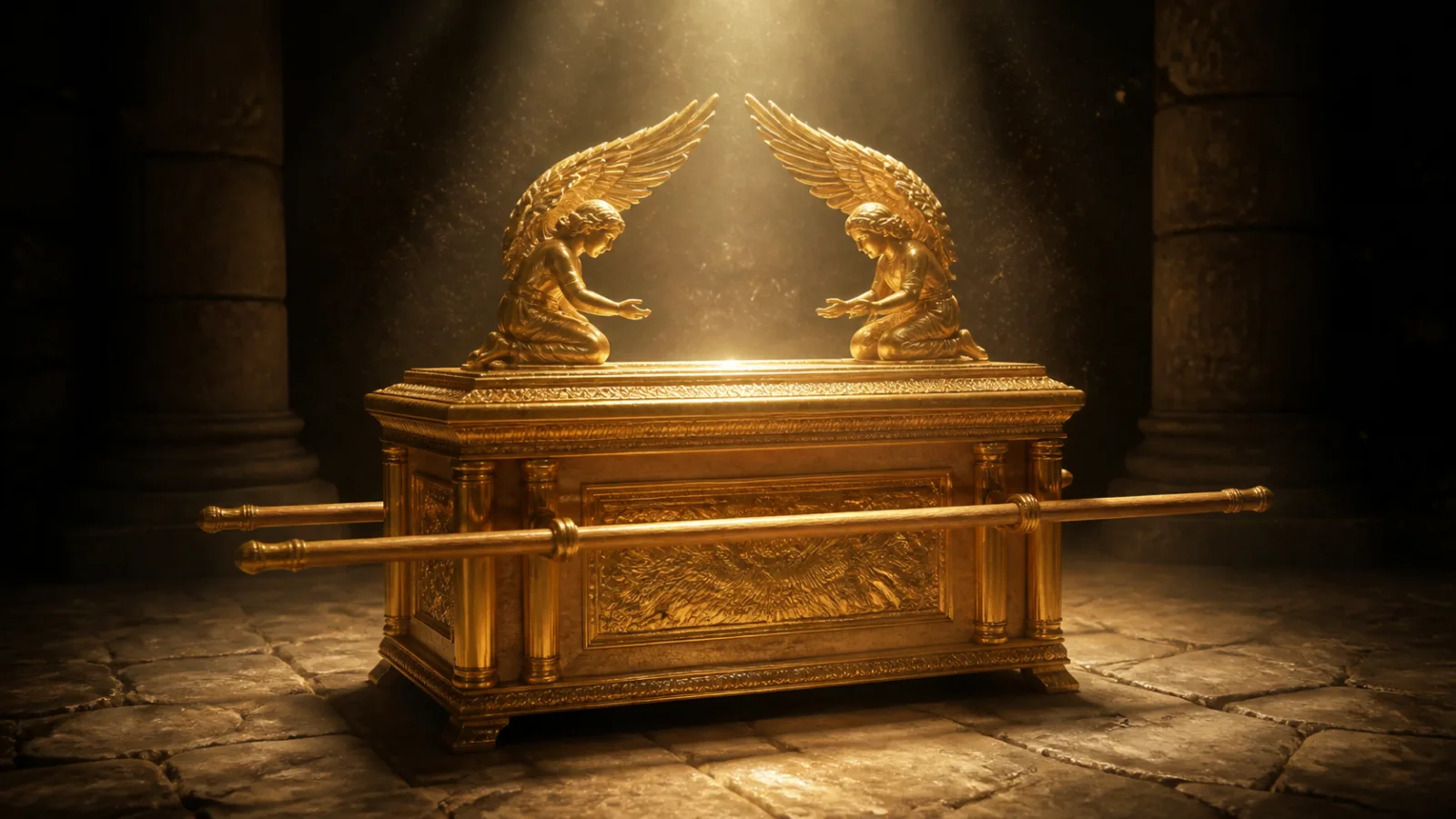
Somewhere beneath the hills of Jerusalem, or perhaps in a hidden chamber in the Ethiopian highlands, or perhaps nowhere at all but ash and memory, sits a wooden box the width of a man's outstretched arms. It is covered in gold. Two winged figures face each other across its lid. And according to the book that describes it in more detail than almost any other object in the ancient world, to touch it without permission is to die.
This is the Ark of the Covenant. For nearly twenty-six centuries, no one has verified where it is. And the last time it appears in a historical record we can trust, it simply walks off the page.
Origins in the Sinai Desert
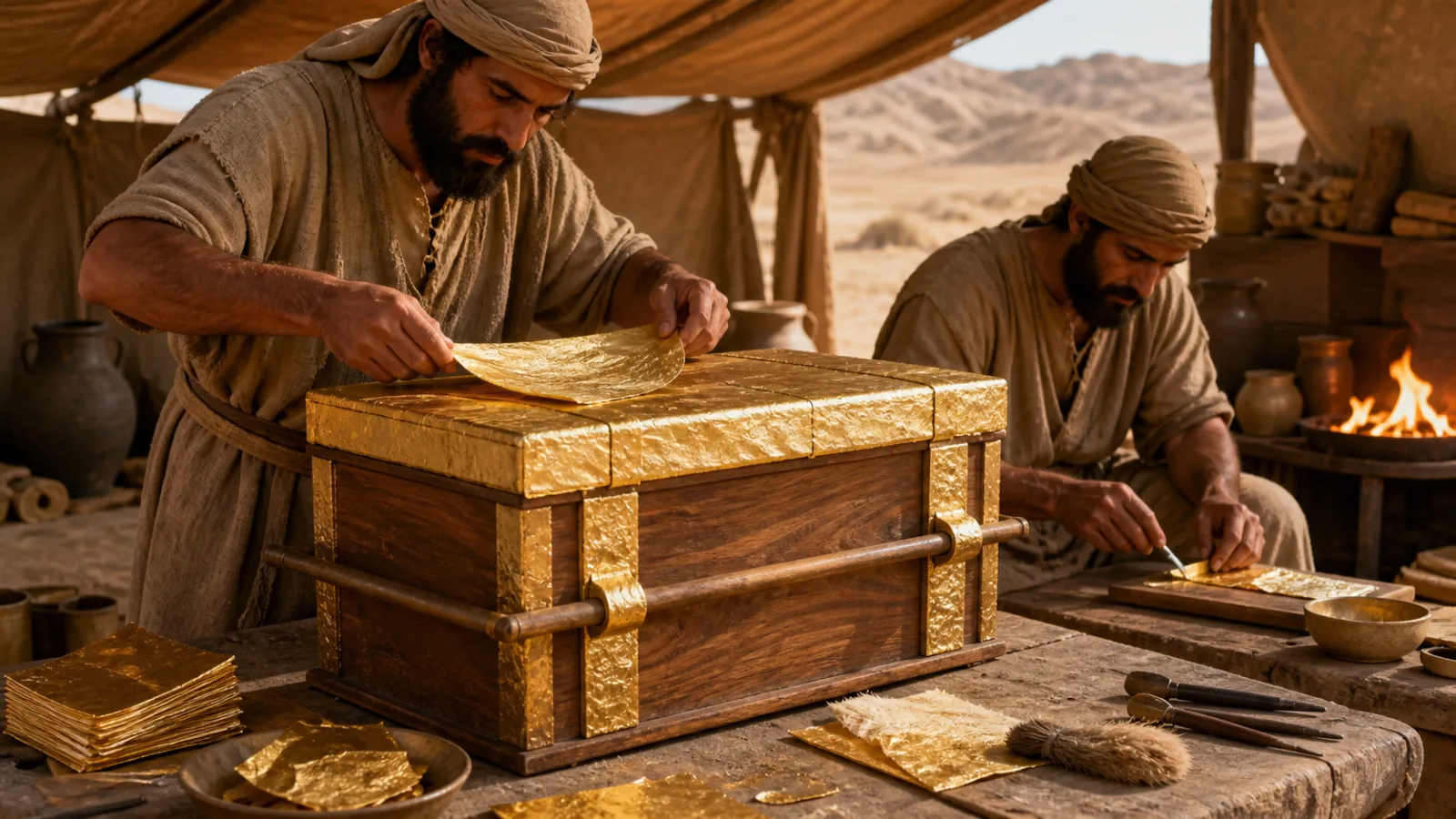
The Ark's story begins, according to the Hebrew Bible, in the Sinai desert, sometime in the thirteenth century before the common era. The book of Exodus gives exact instructions for building it: acacia wood, overlaid inside and out with pure gold, one and a half cubits high, two and a half cubits long, with a gold lid called the mercy seat and two cherubim, winged guardian figures, facing one another above it. Inside, the text says, were placed the stone tablets of the Ten Commandments. Later Jewish tradition adds a jar of manna and the staff of Aaron.
This was not meant to be decoration. The Ark was described as the literal meeting point between the divine and the physical world, carried by the Israelites through the wilderness, and eventually installed in the inner sanctuary of Solomon's Temple in Jerusalem, a chamber called the Holy of Holies, so sacred that only the high priest could enter it, and only once a year.
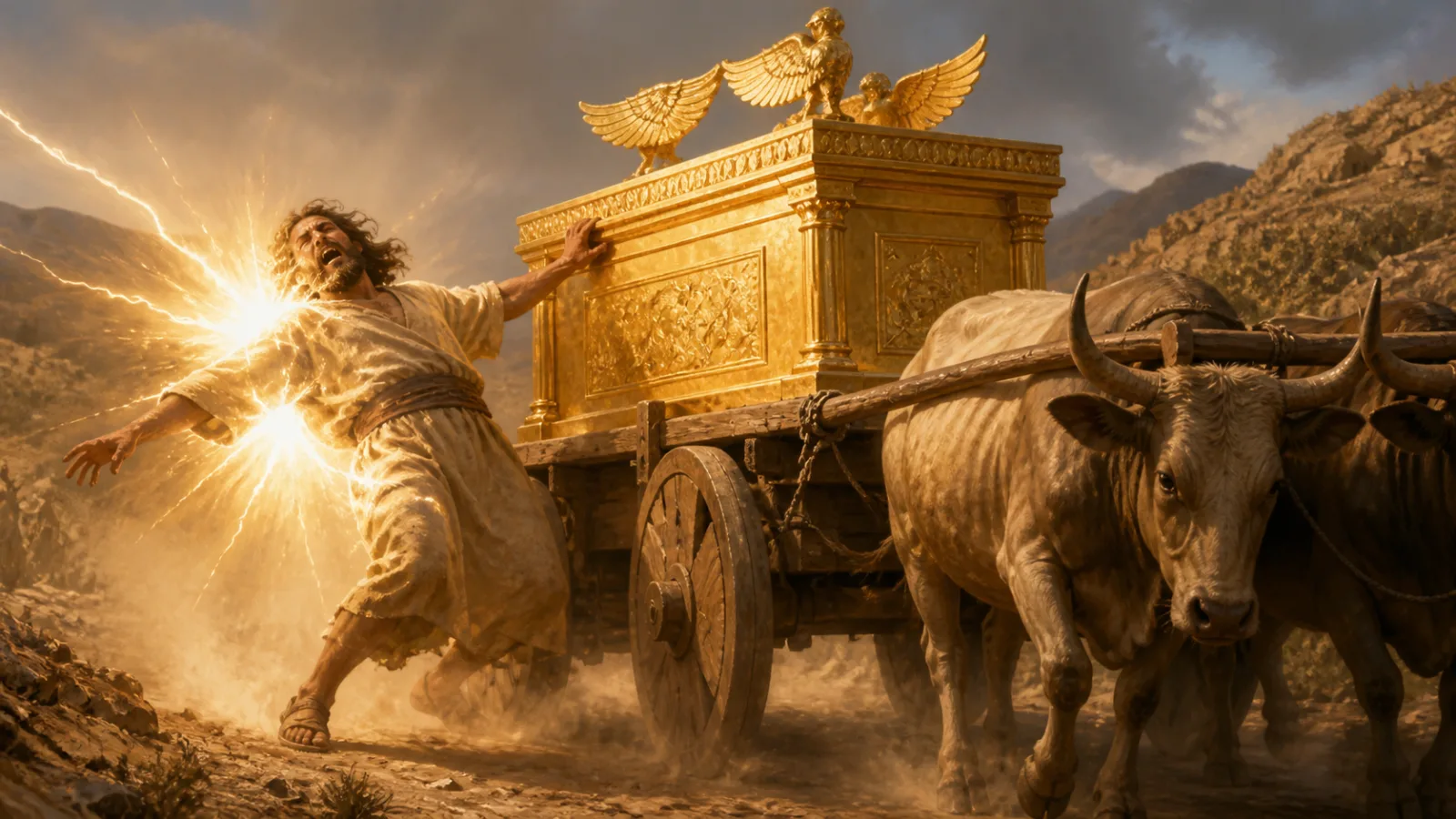
The biblical accounts insist the Ark was dangerous. Second Samuel describes a man named Uzzah, struck dead simply for touching it to steady it on a cart. Whatever it was, it was not treated as a symbol. It was treated as something with real, physical consequence.
The Babylonian Siege and a Sudden Silence
For roughly four hundred years, the Ark's presence in Jerusalem is treated in the biblical text as a matter of course. It is mentioned in temple inventories, in accounts of religious reforms, in stories of kings consulting it before battle. And then, at a very specific point in history, the references stop.
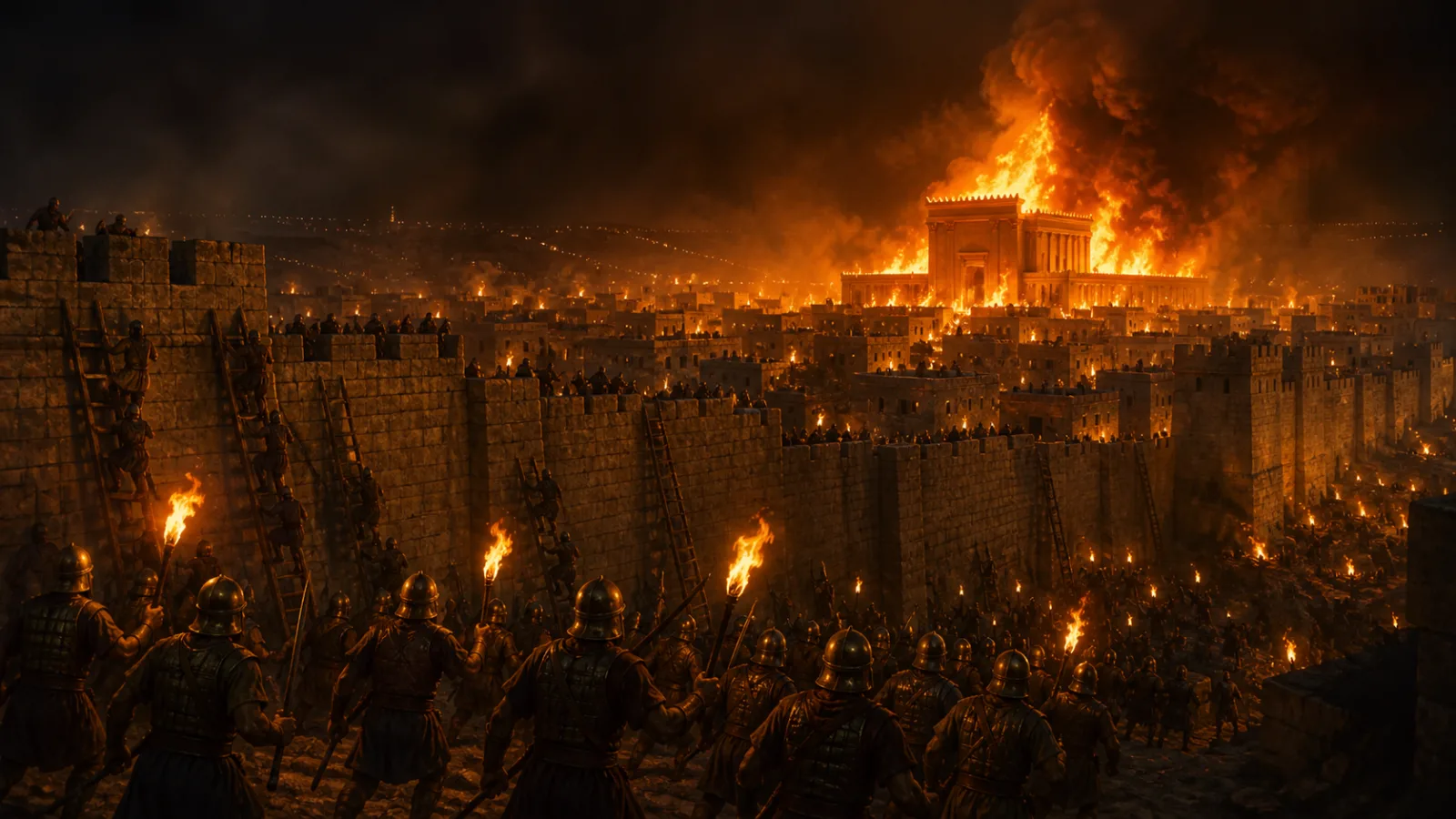
In 587 or 586 BCE, the Babylonian king Nebuchadnezzar II laid siege to Jerusalem and destroyed Solomon's Temple. The second book of Kings and the book of Jeremiah describe the plunder taken from the temple in careful detail: the bronze pillars, the gold basins, the various ritual vessels, all listed by type and sometimes by weight. The Ark is not on that list.
This is the hinge point of the entire mystery. Either the Ark was destroyed or looted along with everything else and simply not thought worth recording — which some historians consider entirely plausible given ancient scribal habits — or it was removed from the temple before the Babylonians arrived, and its absence from the inventory means exactly what it appears to mean: it was already gone.
The book of Second Chronicles adds a strange detail that only deepens the puzzle. It describes King Josiah, reigning about a generation before the destruction of the temple, instructing the Levites to return the Ark to its place, as though it had been moved out at some point and needed to be brought back. Why it had been relocated, and where it went in the meantime, is never explained.
Jewish Tradition Splits
After the Babylonian destruction, Jewish tradition itself splits. The Second Book of Maccabees, written centuries later, contains a story that the prophet Jeremiah hid the Ark in a cave on Mount Nebo, sealing the entrance, and declaring it would remain hidden until God gathered his people again. The Jewish historian Josephus, writing in the first century of the common era, states plainly that the Ark was not present in the Second Temple built after the Babylonians. The Mishnah, the foundational text of rabbinic law, describes the Holy of Holies in the Second Temple as containing an empty space where the Ark once stood, marked by a stone.
In other words, the most detailed religious tradition in the ancient Near East preserved exact architectural specifications for a golden object central to its faith, and then, from a certain point in history onward, treated its absence as an open, acknowledged fact.
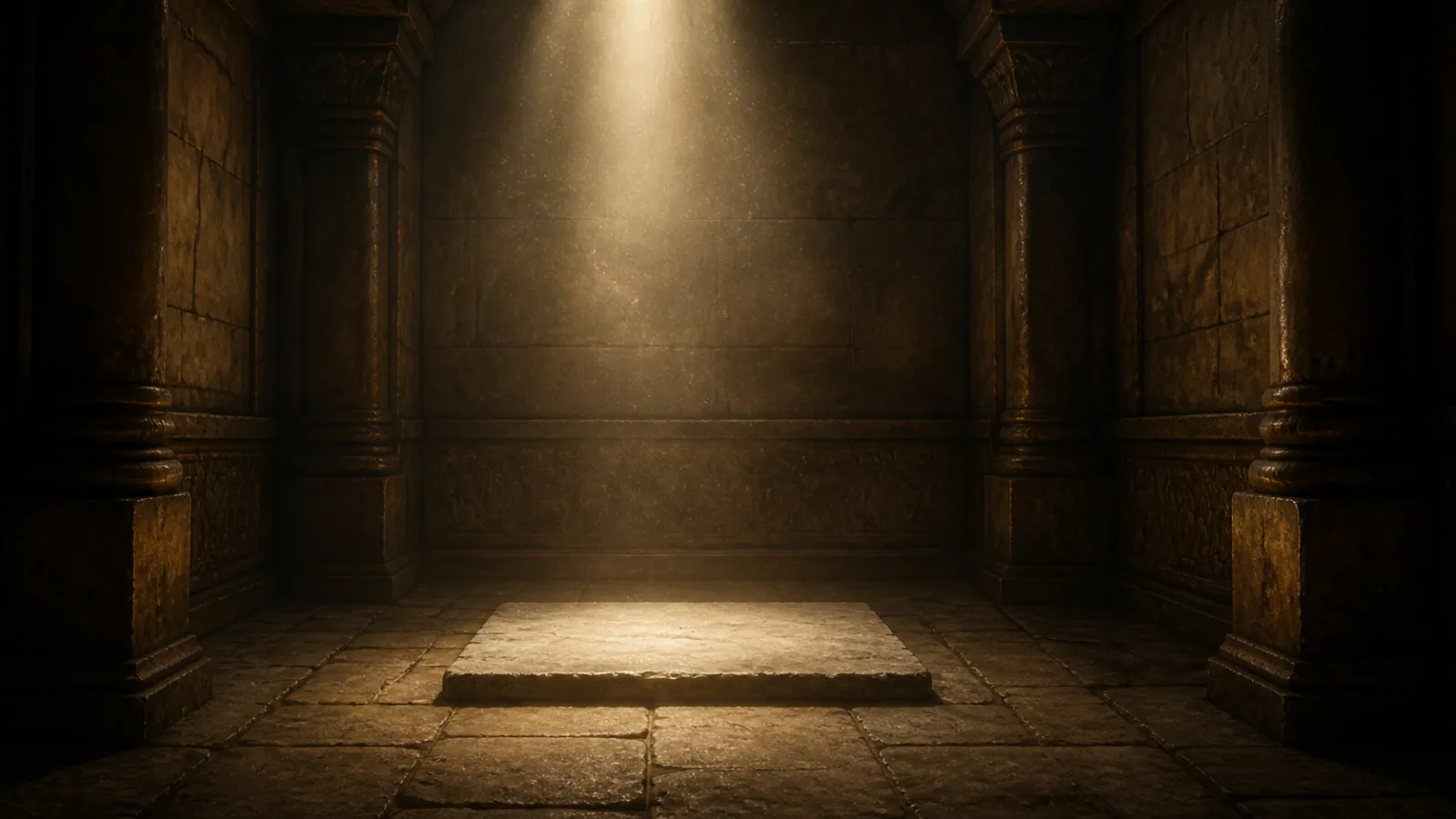
Four Theories on the Ark's Fate
That absence has produced four major threads of explanation, each resting on different kinds of evidence.
Destroyed in the Conquest
The first, and the one favored by most historians and archaeologists, is the simplest: the Ark was destroyed or melted down during the Babylonian conquest, either by soldiers who didn't recognize or care about its religious significance, or deliberately, as an act of conquest against a defeated people's god. Ancient armies routinely stripped temples of precious metal. A large gold-covered wooden box would have been an obvious target, and gold does not survive fire or looting with sentiment attached to it. Under this theory, the missing entry in the plunder lists is not evidence of anything mysterious — it's simply an artifact of incomplete record-keeping in a text written to serve theological and political purposes, not modern accounting standards.
Hidden Beneath the Temple Mount
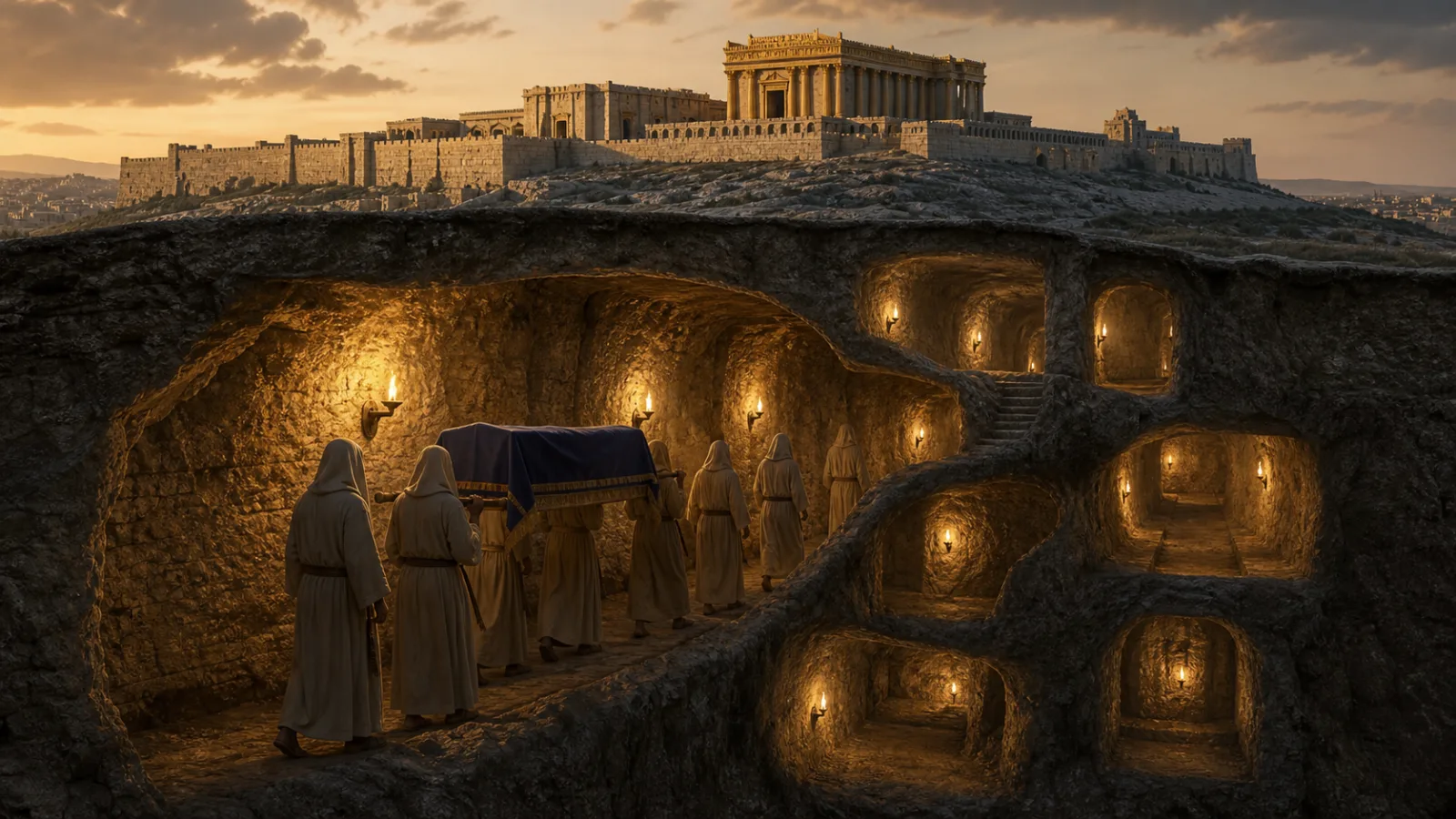
The second theory holds that the Ark was hidden in Jerusalem itself before the siege, likely beneath the Temple Mount, in one of the tunnels or chambers that some researchers believe honeycomb the bedrock beneath the site. This theory draws support from Jewish oral tradition recorded in later rabbinic texts, which describe priests concealing sacred vessels in underground passages as the Babylonian threat grew close. The problem is access. The Temple Mount today sits beneath the Dome of the Rock and the Al-Aqsa Mosque, among the most religiously and politically sensitive ground on Earth. Extensive excavation is not permitted, and it is unlikely to be permitted at any point in the foreseeable future. This means the theory is, by its nature, untestable. It cannot currently be confirmed or ruled out through physical investigation.
The Cave Near Mount Nebo
The third theory follows the Second Maccabees account and places the Ark somewhere in the region east of the Jordan River, hidden by Jeremiah or his associates in a cave, possibly on or near Mount Nebo, the same mountain where the Bible says Moses died. Expeditions have searched the area periodically since the twentieth century. None has produced verified physical evidence.
The Ethiopian Tradition and Axum
The fourth theory is the one most familiar to a general audience, largely because of popular film, but it has a genuine and long-standing basis in Ethiopian religious tradition. The Kebra Nagast, a foundational Ethiopian text compiled around the fourteenth century of the common era, though drawing on older oral traditions, tells the story of Menelik the First, said to be the son of King Solomon and the Queen of Sheba. According to this account, Menelik brought the Ark from Jerusalem to Ethiopia, where it has remained ever since.
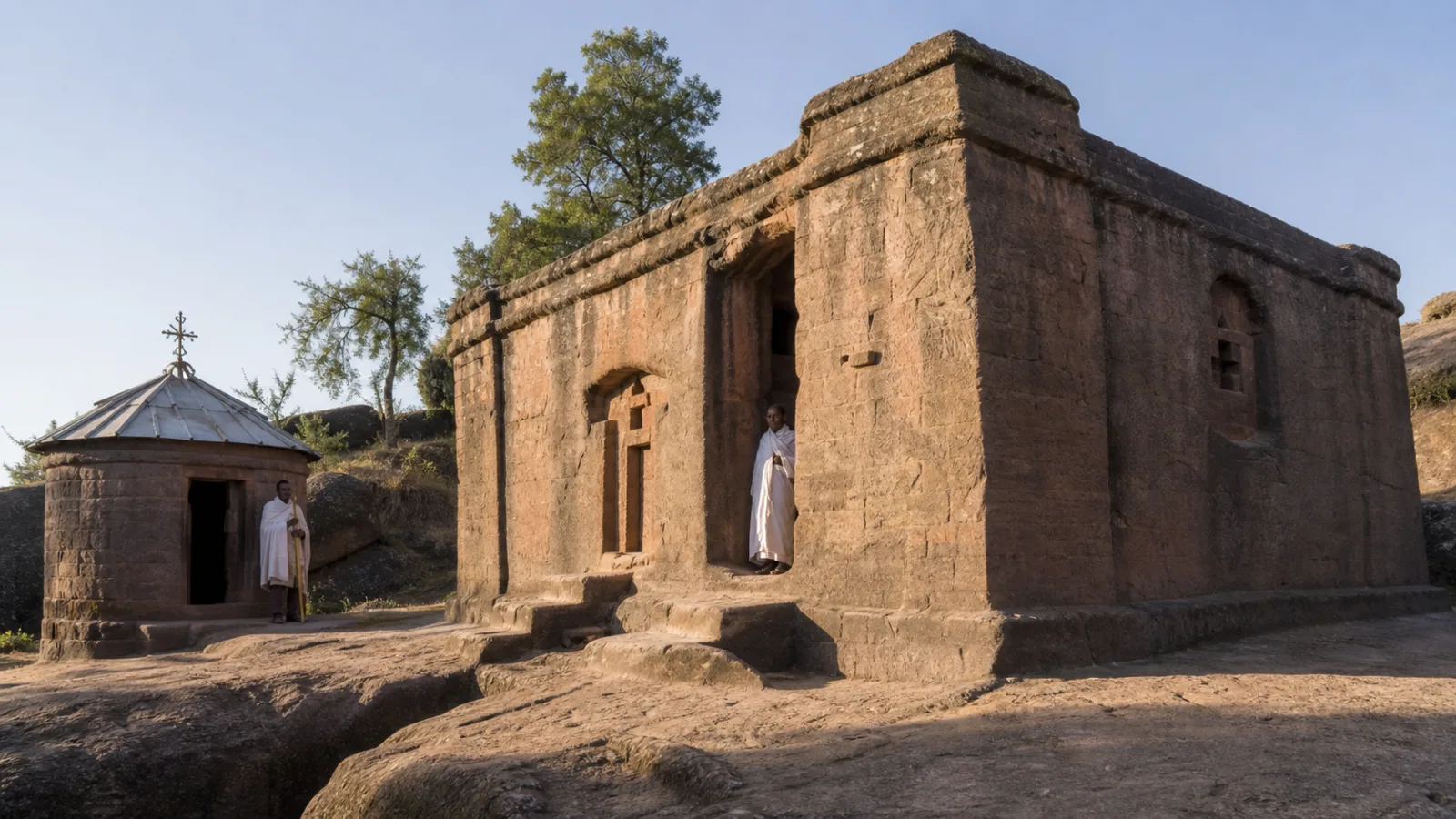
The Ethiopian Orthodox Church maintains, to this day, that the true Ark rests in the Church of Our Lady Mary of Zion, in the town of Axum, guarded continuously by a single monk called the guardian, who, once appointed, is said to remain within the chapel grounds for the rest of his life and never show the Ark to anyone, including other clergy. No outside researcher, historian, or archaeologist has been permitted to examine the object the church says is inside.
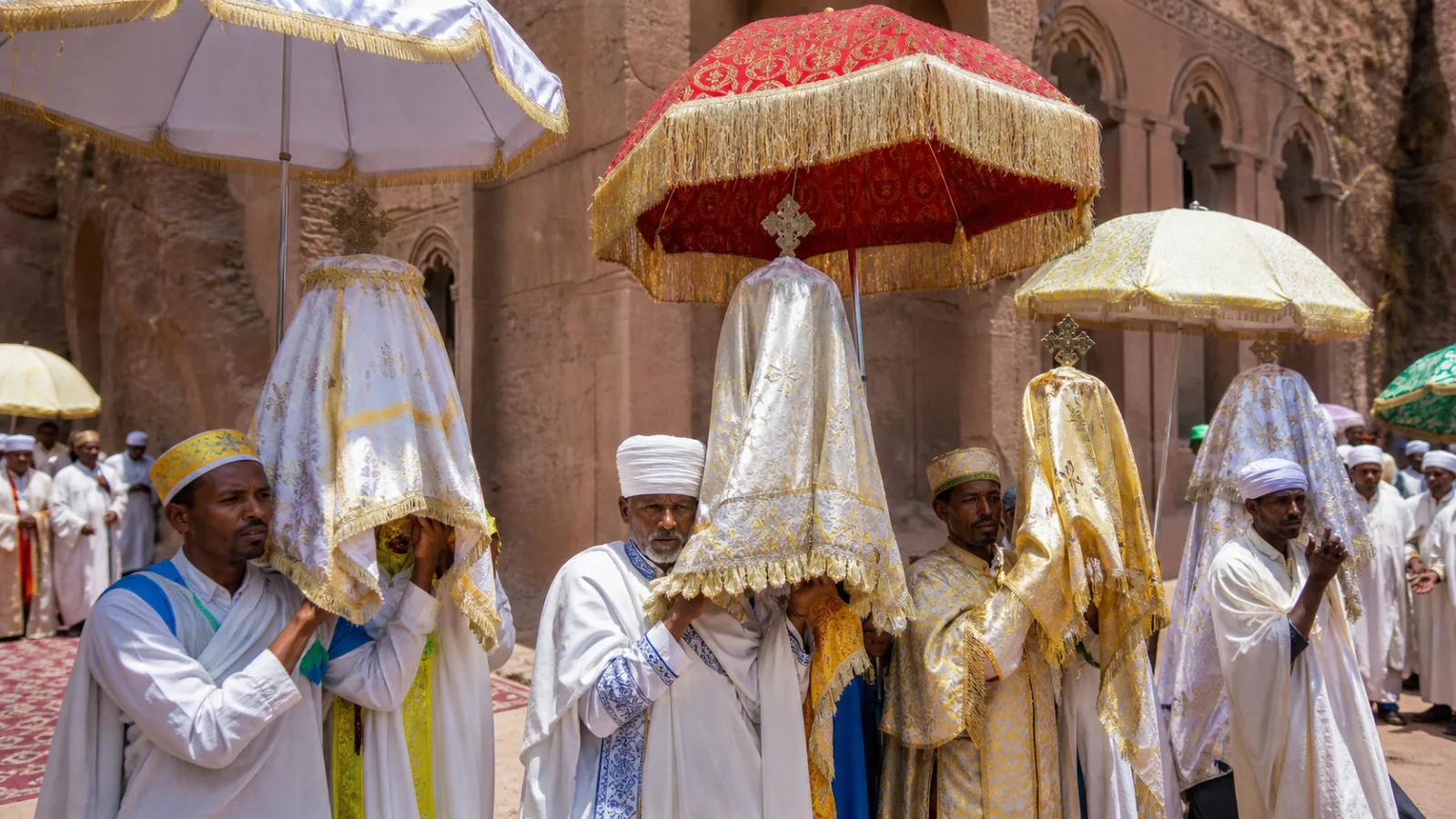
What Ethiopian churches across the country do openly display are replicas called tabots — wooden tablets representing the Ark, used in religious processions and central to Ethiopian Orthodox worship. These replicas are real, documented, and central to a living faith tradition that spans well over a thousand years. Whether an original object lies behind the guarded chapel walls in Axum is a claim resting entirely on religious authority and unbroken tradition, not on independent verification.
Weighing the Gaps
Each theory rests on a different kind of evidence, and each has a different kind of gap. The destruction theory fits what we know about ancient warfare but can't explain why the Ark, unlike every other temple vessel, goes unlisted. The Jerusalem concealment theory fits Jewish oral tradition but cannot currently be tested because the site is inaccessible. The Jordan theory rests on a text written centuries after the events it describes. And the Ethiopian tradition, whatever its deep religious sincerity and historical continuity, is protected by a rule that makes outside verification, by definition, impossible.
Did the Ark Exist as Described?
Archaeologists have also raised a separate, quieter question that sits underneath all four theories: whether the Ark, as described with such precision in Exodus, ever physically existed in the form the text describes, or whether the biblical description reflects a later idealized account of a real but more modest ritual object, common in the ancient Near East, whose true appearance was elaborated over centuries of retelling. This is not a claim that the Ark is fiction. It's a recognition that ancient texts describing sacred objects often blend historical memory with theological meaning, and untangling the two, this far removed from the events, may not be fully possible with the evidence available.
The Enduring Silence
What remains constant, across every theory and every tradition, is the silence. No fragment of gold overlay has ever been recovered and authenticated. No inscription mentions its fate. No burial, no melting, no relocation has left a trace that satisfies the standards of physical archaeology. The most detailed religious description of an object in the ancient world simply stops, mid-sentence, in the historical record, sometime in the sixth century before the common era, and everything after that is inference, tradition, and faith.
Somewhere, a monk in Axum is, at this moment, the only living person permitted to see what may be inside a small stone chapel guarded for generations by a single unbroken chain of solitary keepers, none of whom has ever spoken of what lies within. If the Ark is there, it will likely never be confirmed in our lifetimes, because the rule that protects it is older, and stronger, than our curiosity about it.