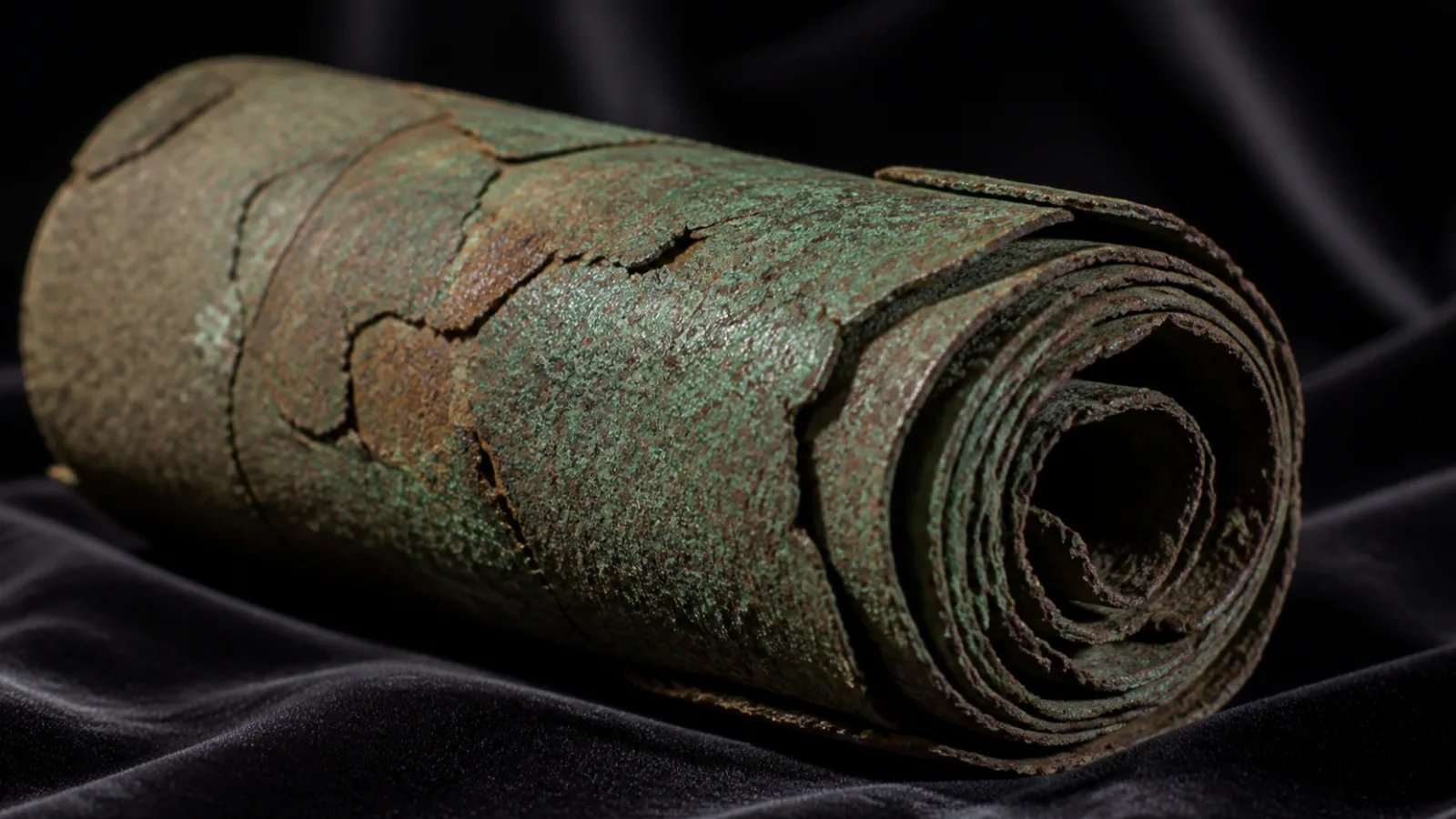
In March 1952, inside a cave above the ruins of Qumran near the shore of the Dead Sea, archaeologists watched as two pieces of corroded metal emerged from the dust. Unlike the parchment scrolls already found in the surrounding hills, these were copper, rolled tight, oxidized green, and so brittle that no one dared to unroll them.
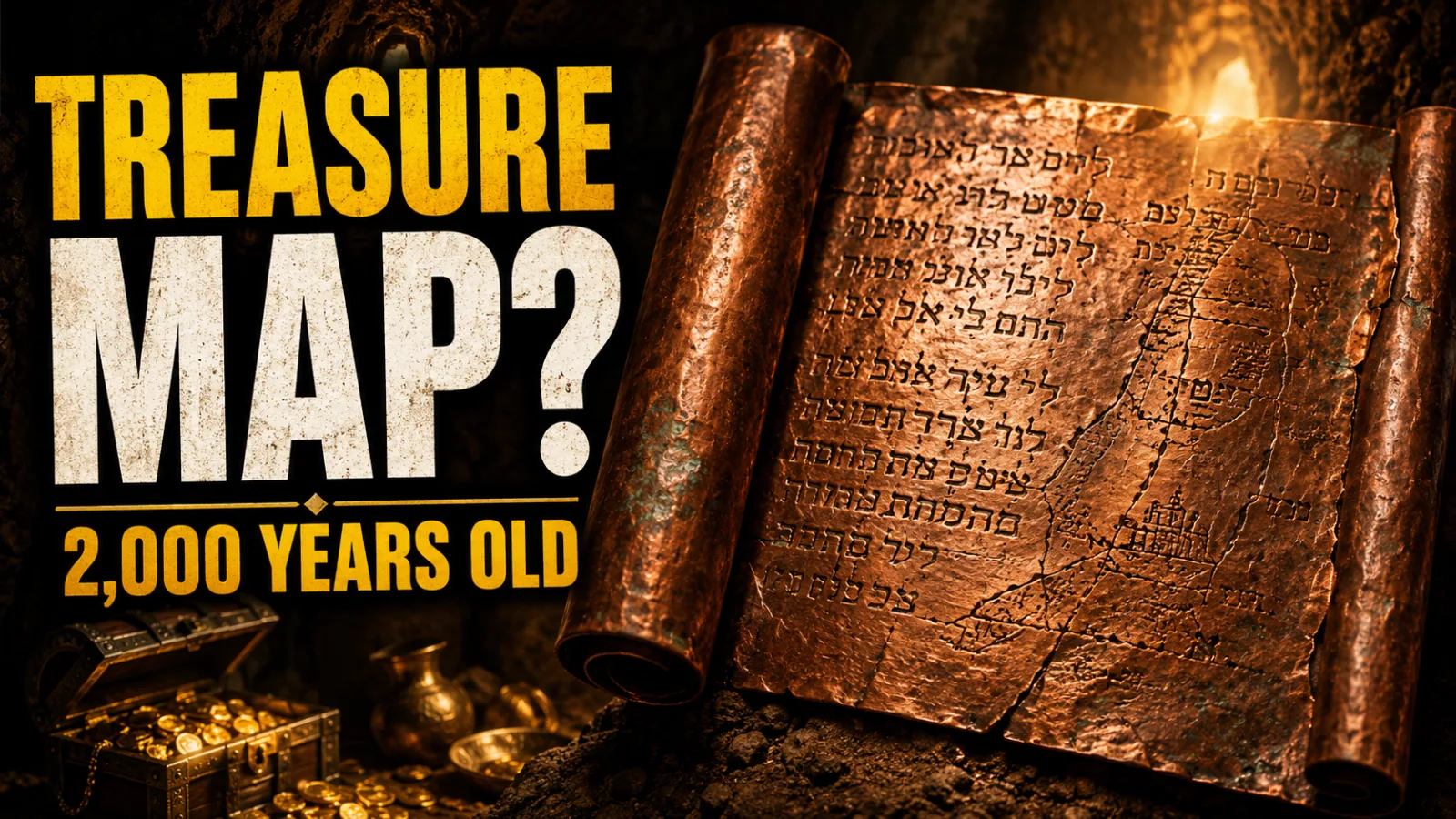
Engraved into the metal was a message in an ancient dialect of Hebrew. When scholars finally deciphered it, they found something unlike anything else recovered from the Dead Sea Scrolls: not scripture, not prophecy, but a list. Sixty-four locations across the Judean wilderness, each one supposedly holding a fortune in gold and silver.
Seventy years later, the central question remains unresolved. Was this treasure real, and if so, where did it go?
A Discovery That Broke the Pattern
The story begins in the winter of 1946 and into 1947, when Bedouin shepherds discovered the first of what would become known as the Dead Sea Scrolls, tucked into jars in a cave near Qumran on the northwestern edge of the Dead Sea. Over the following decade, archaeologists and local Bedouin searched eleven caves in the area, recovering fragments of nearly nine hundred documents.
Most of these texts fit a recognizable pattern. They were produced by a Jewish community living in the region between roughly the third century BCE and 70 CE, when Roman forces crushed the Jewish revolt and likely ended whatever settlement had existed at Qumran. The scrolls contained biblical texts, community rules, hymns, and sectarian writings, generally attributed to a Jewish sect often identified with the Essenes, who lived an ascetic, disciplined life in the desert.
Then came Cave Three, and a document that broke every pattern the others had established.
Copper, Not Parchment
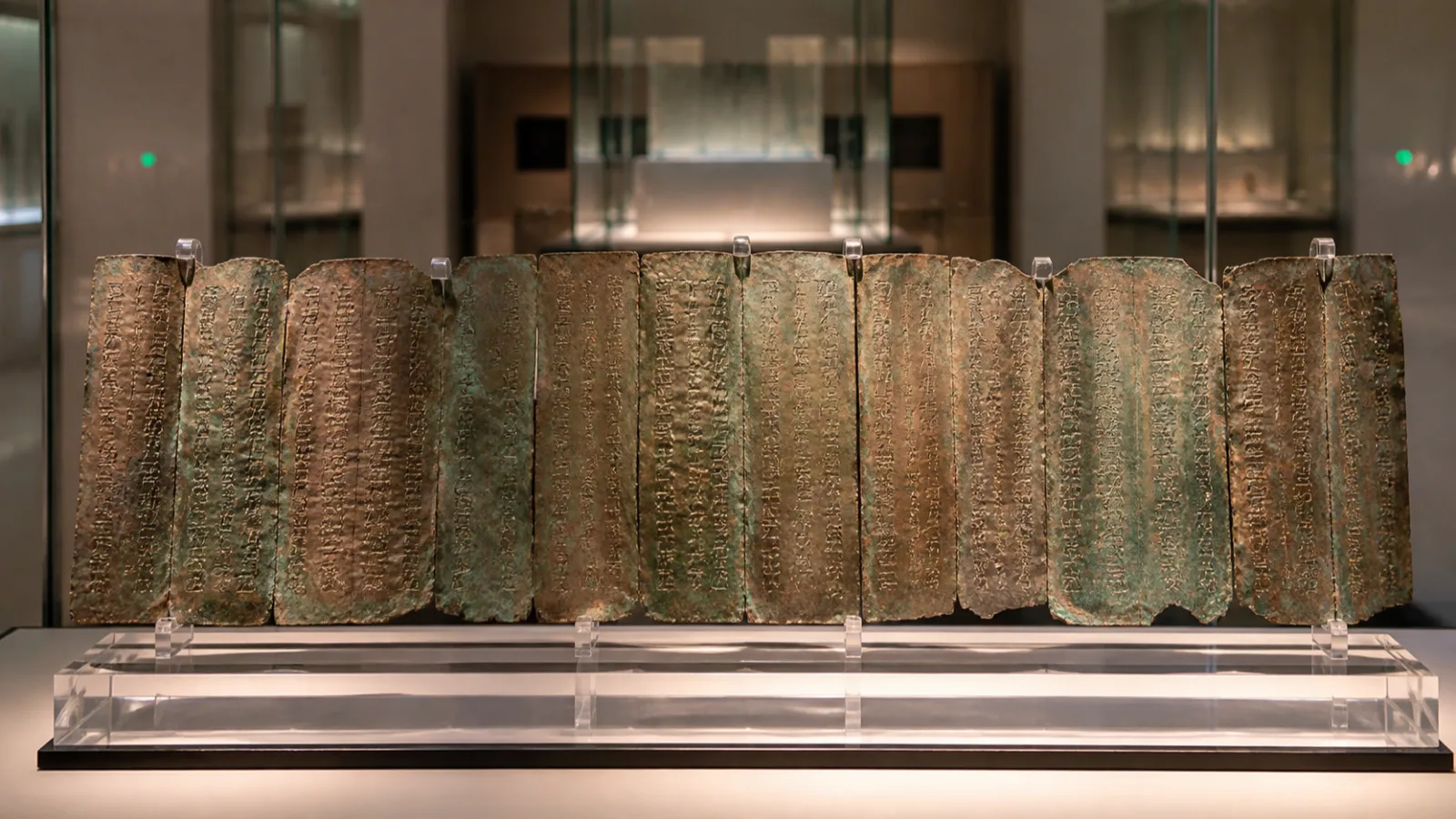
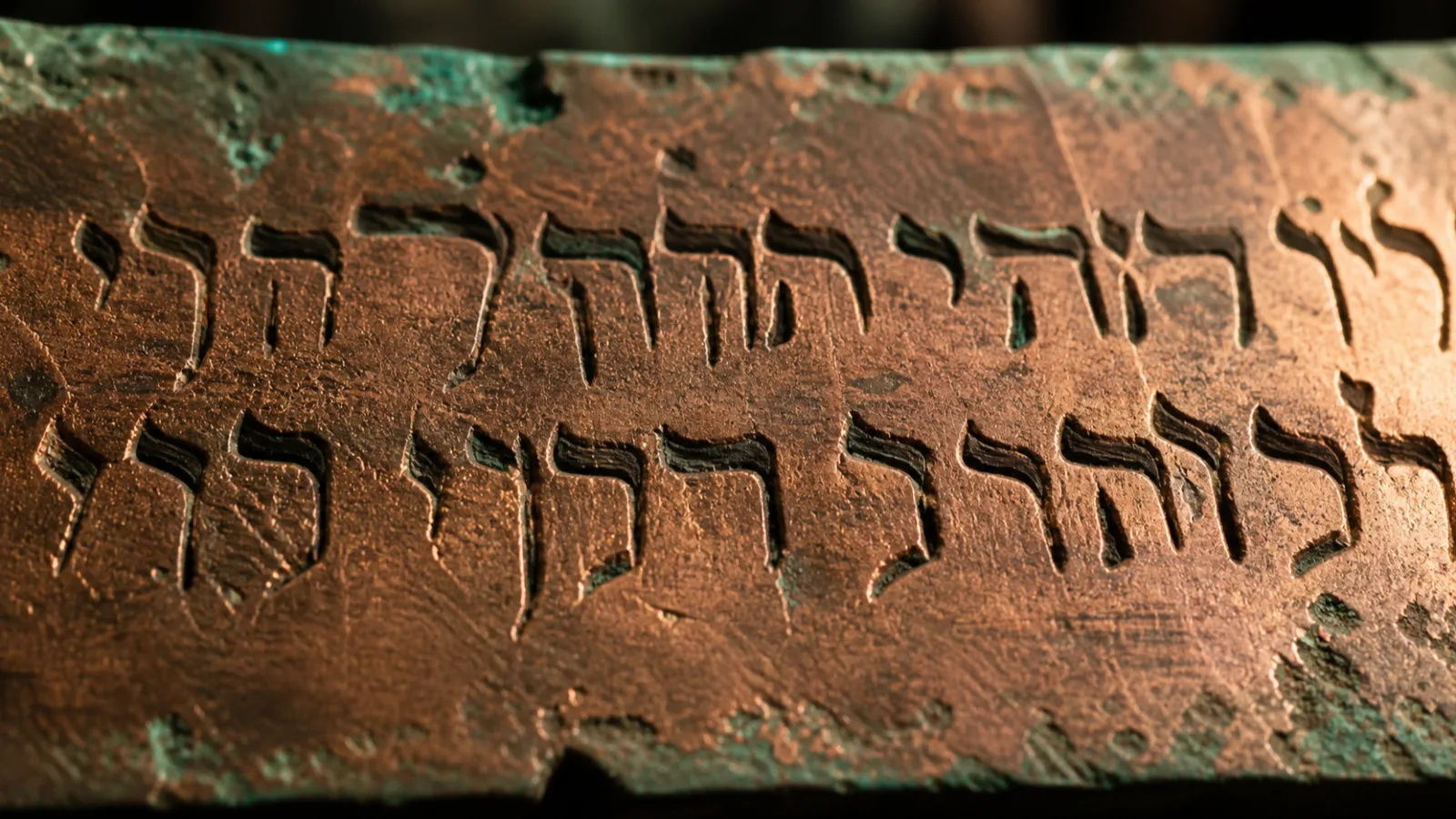
The copper scroll wasn't made of parchment or papyrus. It was hammered into three thin sheets, joined together, engraved with a chisel-like tool, and rolled into two separate scrolls. Copper was expensive and difficult to inscribe, suggesting whoever made this document wanted it to last.
Because the metal had corroded into a solid, brittle mass over nineteen centuries, it couldn't be unrolled like the leather scrolls beside it. Any attempt to flatten it risked shattering the text into fragments. For five years, the copper scroll sat unopened, a mystery sealed inside a mystery.
The solution came in 1956 at the College of Technology in Manchester, England, where a professor named H. Wright Baker devised a method to cut the scroll lengthwise into narrow curved strips using a fine saw. The delicate, almost surgical operation worked, and strip by strip, the inscription came into the light for the first time since the Roman era.

An Unusual Language, and a Startling List
The copper scroll is written in a form of Hebrew unlike the other scrolls at Qumran, more closely resembling later rabbinic Hebrew than the biblical style used elsewhere in the collection. It also contains unusual spellings and Greek letters interspersed at several points, letters whose purpose still isn't fully understood. Some researchers believe they were abbreviations or codes tied to specific locations; others think they may have marked measurements or served as a checklist for whoever hid the items.
But it's the content, not the language, that made this document famous. The scroll lists sixty-four separate caches of treasure hidden in cisterns, tombs, aqueducts, and ruins across the region around Jerusalem and the Dead Sea. Each entry follows a similar pattern: a location described in relation to a landmark, well, tomb, or structure, followed by the type and quantity of treasure buried there, gold, silver, and vessels, often with specific weights recorded in ancient units of measurement.
Scholars have long debated exactly how much treasure the scroll describes, since the ancient units are difficult to convert with precision. But even conservative estimates put the described wealth at a staggering scale, credibly running into many tons of gold and silver, an amount that, if real, would represent one of the greatest hidden fortunes ever documented on a single artifact.

The Temple Treasure Theory
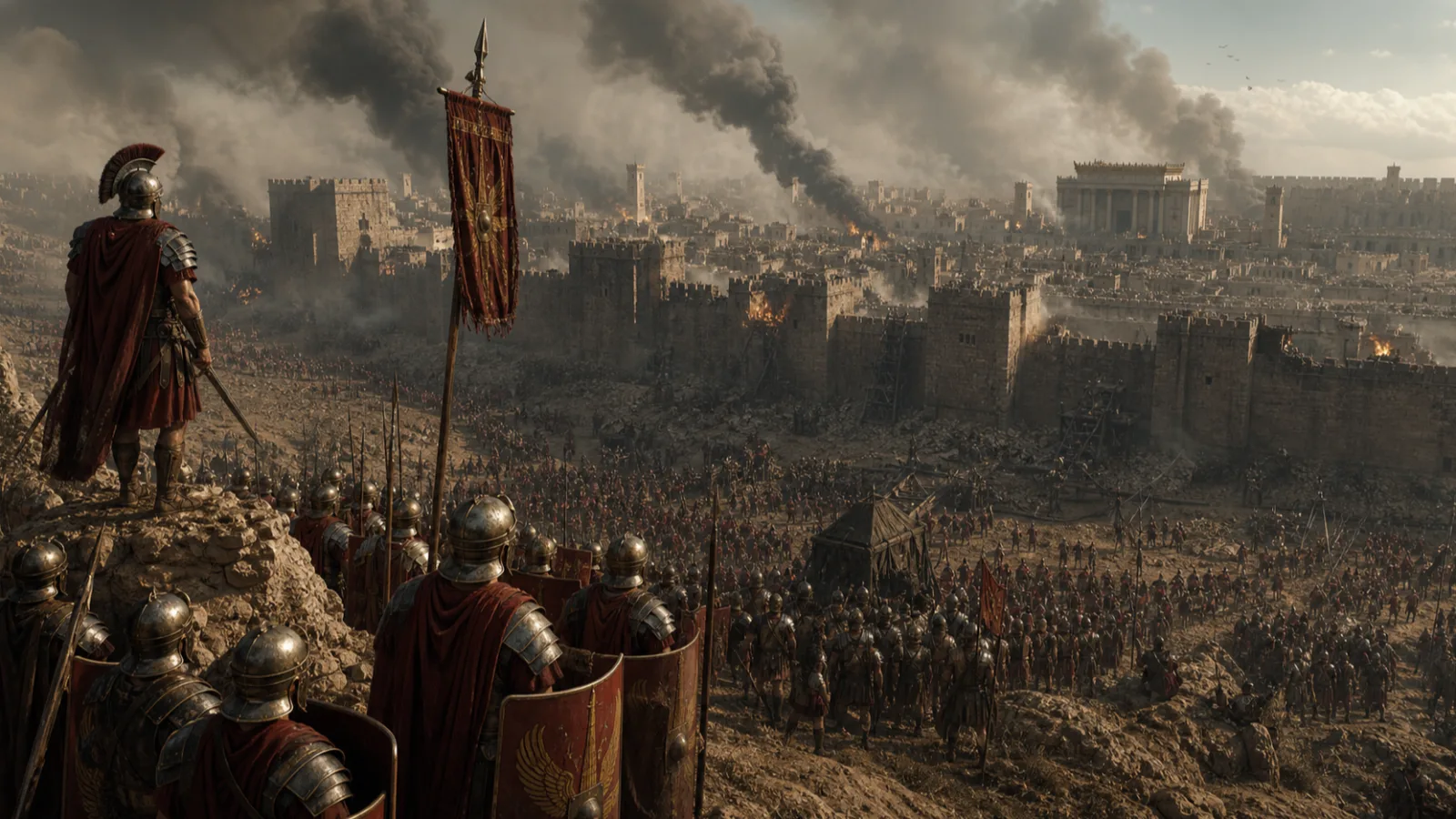
The leading theory connects the treasure to the Temple in Jerusalem. In the years leading up to the Jewish revolt against Rome, which began in 66 CE, tensions in Judea were reaching a breaking point. The Second Temple held vast wealth accumulated over generations through offerings, tithes, and treasury reserves.
As Roman legions advanced toward Jerusalem, culminating in the city's fall and the Temple's destruction in 70 CE, it's plausible that priests or officials moved to save what they could. Hiding treasure ahead of an invading army was not unusual in the ancient world. If temple officials buried the wealth intending to recover it once the crisis passed, the copper scroll may have functioned like a modern deposit ledger, an inventory meant for those with the authority and knowledge to retrieve it later.
Under this theory, the disaster that followed explains the treasure's disappearance. Jerusalem fell, the Temple burned, and if the people who buried the wealth died in the siege, were killed in the war's aftermath, or were scattered in the diaspora that followed, the knowledge needed to find these sites could have died with them. The scroll would then be less a treasure map than an orphaned record, instructions with no one left alive to read them correctly.
A Skeptical Counter-Theory
Not every scholar accepts that this treasure was ever real in the way the scroll describes. A significant counter-theory holds that the list is symbolic, exaggerated, or a kind of folklore, cataloguing legendary or communal wealth rather than an actual, accessible inventory.
Some researchers point to the sheer scale of the reported treasure, difficult to reconcile with what's known about the economy and resources of first-century Judea, as reason to suspect inflation through scribal tradition, symbolic numbers, or exaggeration passed down before being committed to copper. Under this view, the scroll may reflect what people believed the Temple's wealth to be, or wished to preserve as memory of it, rather than a precise, retrievable ledger.
There's also the matter of the locations themselves. Some entries reference place names or landmarks that no longer exist or were never securely identified even in antiquity. Others are frustratingly vague to modern readers, referring to structures or geographic features that would have been obvious to a local audience two thousand years ago but mean little today. This has led some archaeologists to treat the copper scroll as more valuable for what it reveals about Second Temple period record-keeping, geography, and language than as an actual functioning map.
Decades of Failed Expeditions
Beginning in the 1960s, several expeditions attempted to use the copper scroll as a literal guide, most notably efforts led by John Allegro, who had been present at the scroll's discovery and remained convinced its treasure was genuine. Over the following decades, teams surveyed sites around Qumran, in the Judean wilderness, and near Jerusalem, cross-referencing the scroll's descriptions with known ruins, cisterns, and tombs.
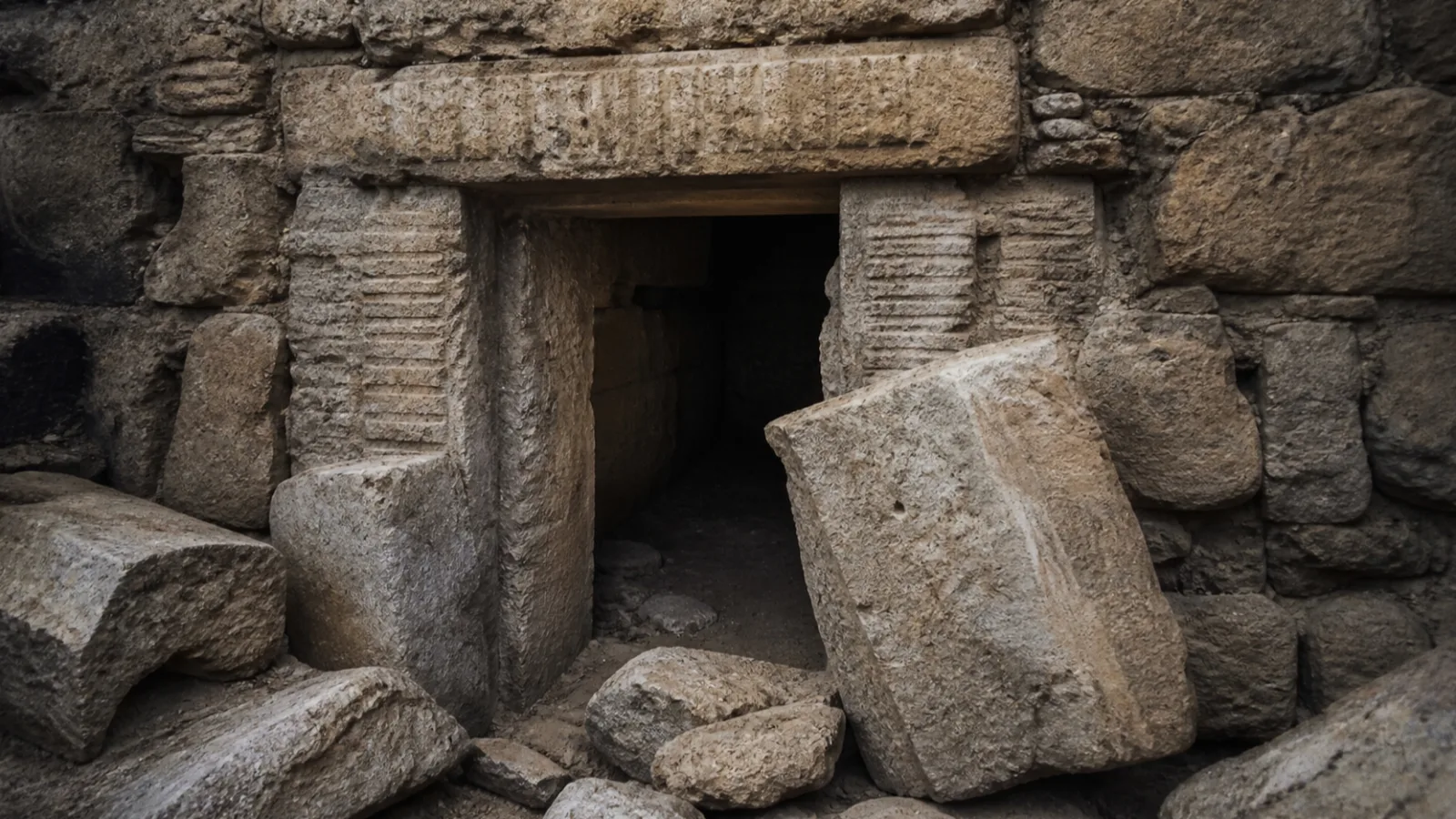
No expedition has produced a confirmed cache matching the copper scroll's descriptions. Some searches turned up nothing at all in locations that seemed to match the text. Others found sites that had clearly been disturbed long before modern archaeologists arrived, raising the possibility that ancient or medieval treasure hunters may have already emptied at least some of these caches, using the same landmarks a modern reader might identify. If that's what happened, the copper scroll wouldn't be a map to treasure still waiting underground, but a record of treasure retrieved so long ago that no trace of the recovery survives.
What Remains Unknown
This is where the mystery settles into its most uncomfortable shape. There is no definitive evidence that any of the sixty-four caches were ever found and emptied. There is also no definitive evidence that any of them still hold what the scroll describes. The copper itself survived; the gold and silver, if they were ever there, left no trace that can be verified today.
What's left is a document that behaves like nothing else recovered from Qumran: written in a different hand, a different dialect, engraved in a different material, for a different purpose. It speaks the practical language of inventory and location, not scripture or prayer. Whoever wrote it wasn't interested in being understood by history. They were writing for someone specific, someone who would have recognized these places on sight, and who, for reasons unknown, never came back to read it.
The copper scroll sits today in the Jordan Museum in Amman, its strips reassembled and displayed, still legible after nearly two thousand years underground. Researchers continue to study its language and geography, refining theories about individual sites and reexamining old excavation notes for anything that may have been missed.
One detail resists easy resolution: if the treasure was symbolic or exaggerated, why encode it in copper, a material chosen specifically to survive, rather than parchment, the medium used for everything else the community wrote? People don't typically go to that kind of trouble and expense to preserve a legend.
Somewhere in the hills above the Dead Sea, in ground surveyed, dug, and studied for seven decades, there may be nothing left to find. Or there may be gold still sitting exactly where a hand pressed a chisel into copper two thousand years ago, describing a hiding place meant to be temporary, and which time turned permanent.